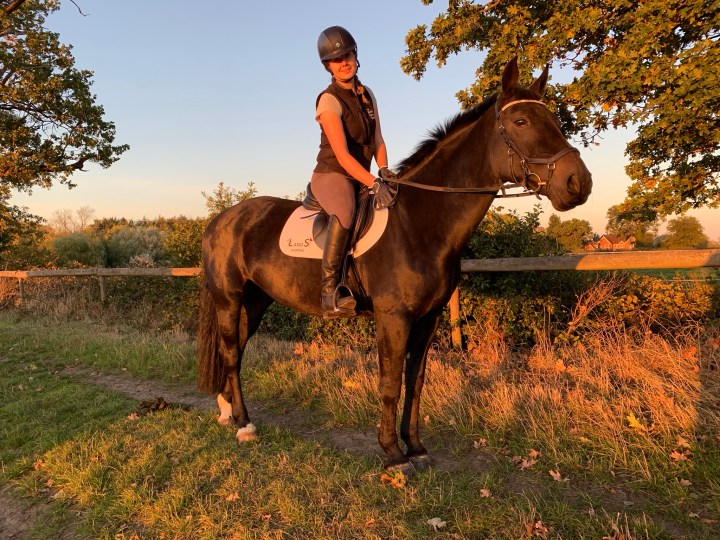
Today marks World Mental Health Day, which is all about raising awareness of mental health issues and helping to break down the stigma that still exists. I strongly believe that you need to pay as much attention to your mental wellbeing as to your physical wellbeing, and I think everyone in the equestrian community has a part to play in progressing the conversation around mental health and letting people know that it’s ok not to be ok.
This post will be illustrated by images from Charlie Mackesy’s Instagram account, because I think his drawings always sum everything up perfectly.
For me, horses and good mental health go hand in hand. I can have the most stressful day at work, be feeling unwell or like everything is just getting on top of me, and as soon as I get down to the yard I feel so much better. Horses give us an opportunity to get outside, to exercise, and to spend time with an animal – all things proven to increase our wellbeing.
But what about the darker side of horses and mental health? Over the past few years, there’s been a rise in incidents reported in the media about bullying in the equestrian community. The British Grooms Association launched their “Grooms Minds” campaign last May, and set up a helpline for their members who might need to talk to somebody about any issues. There have also been desperately sad stories of people in the equestrian community who have taken their own lives after being subject to bullying online. And more and more frequently, social media is involved.
Have a nose around equestrian social media sites and accounts, and you’ll see this bullying happening first hand. There’s trolling from the keyboard warriors who feel it’s ok to write spiteful comments on people’s posts criticising their riding, saying things they’d never say in real life.
And then there’s the constant need for affirmation that affects so many people on Instagram – trying to curate a flawless feed that leaves no room for any doubt that your life isn’t picture perfect. It’s a vicious cycle, as it’s then impossible for others to live up to that perceived perfection of the life of the influencer, so they constantly compare themselves negatively. It’s easy for thoughts to creep in like, “I don’t have as many followers as them.” “I don’t win as much as them.” “I’m not as good a rider as them.”
Before social media, it was impossible for people to compare themselves with anyone outside of the people you knew and saw personally. Now, with over one billion users on Instagram, that comparison pool has become a whole lot bigger. No wonder our mental health is being affected.
Eventing is a pretty unique sport, in that the chances of winning any given competition are actually quite low and you basically need to perform perfectly on the day to be up there in the placings. That, coupled with the fact that we pour so much time, effort and money into it, can put a lot of pressure on us to do well. But sometimes I read people’s event reports online, and it seems like there’s a reluctance to say when it didn’t go as planned, and there’s a need to make excuses for why their dressage score was lower than they’d like or why they didn’t go clear show jumping. Like it’s too hard to just say, you know what? It just didn’t go my way today, and that’s ok.
But since starting my blog, and particularly my Instagram account, I’ve seen that there’s so much potential for positivity on social media. You have the ability to connect with so many people you wouldn’t ordinarily have the opportunity to meet. You can share experiences with each other, and learn from each other. And the most important thing? Encourage each other.
I can go to an event, put a story up and receive several messages of good luck from people I’ve never met. Do I really need social media friends to be following my journey and wishing me luck? Probably not, but it really does help me to feel more positive. Some really lovely accounts have followed me who have given me support not only when things have been going well, but they’ve also picked me up when I’ve been feeling really down too. And that’s the potential of social media – it just depends how you use it.
So, think before you use social media. You don’t know what other people are dealing with in their life, and being subjected to negative comments on social media can perpetuate a person’s feeling of self-doubt and low self-worth. It costs nothing to be kind! Don’t stress about how other people are using social media, either. Nobody’s life is picture perfect, no matter how it looks on Instagram. Stop the comparisons, and focus on your own journey: it’s never going to be the same as anybody else’s, and that’s ok.
And take those conversations offline, too. Speak to your friends or family about it. Remember, it’s ok not to be ok.
 Totally Amateur Eventing